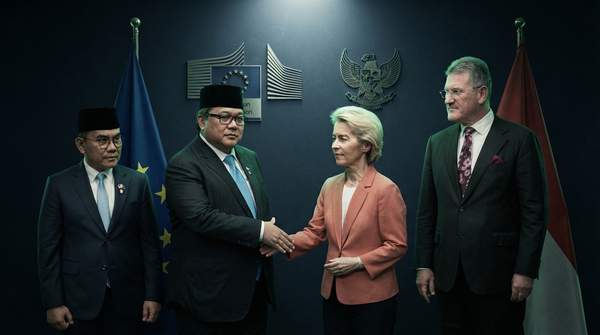
The European Union and Indonesia signed a Comprehensive Economic Partnership Agreement (CEPA) and a separate Investment Protection Agreement (IPA) in Brussels on November 21, 2026, completing a negotiation process launched in July 2016 and concluded in September 2025. The deals, announced by the European Commission, are projected to increase EU exports to Indonesia by almost 40% within 15 years, with machinery, motor vehicles and metals expected to see the largest gains on the European side.
Strategic Goals: Diversification and Supply Chain Resilience
Officially framed as a step in the EU's strategy of diversification and partnerships, the agreements strengthen ties with Southeast Asia's largest economy and the world's fourth most populous country. According to the Commission's announcement, they reinforce rules-based trade, provide a stable and predictable framework for trade and investment, and contribute to more secure and resilient supply chains for energy and raw materials — a chapter-level priority reflected in the CEPA's dedicated provisions on energy and raw materials.
The announcements also stress new opportunities for businesses on both sides. For Indonesia, the deal's significance extends beyond market access: a dedicated protocol addresses the agreement's potential to support trade in sustainable palm oil, an acknowledgement of the sector's centrality to Indonesian exports and its friction with EU deforestation rules.