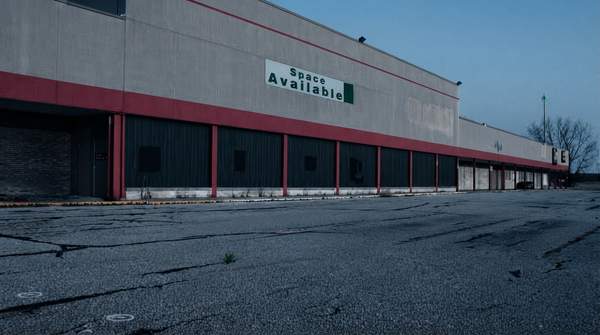
A zombie startup is a venture-backed company that generates just enough revenue to cover its operating expenses but has lost the growth potential to attract further investment or achieve an acquisition or IPO. It makes payroll, ships products and holds board meetings, yet has no clear path to growth, new financing or an acceptable exit. For investors, the core question is economic: is more time and capital increasing expected value, or just delaying an inevitable loss?
What is a Zombie Startup?
The definition synthesizes several perspectives on the same phenomenon. Writing on entrepreneurship theory, Andre Laplume describes a company caught in "a state of suspended animation"—revenue and user acquisition have plateaued for several quarters or years, and past venture capital can no longer be followed by new rounds because the unit economics do not scale. A legal glossary used by emerging-company counsel frames it more bluntly: a venture-backed company that is "basically 'walking dead,'" maintaining just enough cash flow to keep the doors open while an acquirer is sought.
Crucially, a zombie state is distinct from other difficult but recoverable situations. A pivot is an intentional strategic change with measurable progress; bootstrapping involves sustainable unit economics and controlled growth. A zombie, by contrast, exhibits stagnation: flat user growth, no customer traction, declining morale and zero investor interest. Founders, emotionally invested in the original idea, often refuse to pivot or shut down, and the company limps forward on a skeleton team with dwindling cash—sometimes for years.
The phenomenon is not purely internal. As Intelectium, a startup advisory firm, notes, whether a company becomes a zombie depends not only on internal factors but sometimes heavily on market conditions. Venture investor Ivan Nikkhoo traces many current zombies to the early 2020s, when near-zero interest rates and abundant liquidity pushed record capital into venture—creating vintages that later stalled when growth slowed and outside investors disappeared.
Zombie Startup Diagnostic Framework
Use the matrix below to assess a company systematically across four dimensions. No single warning sign is conclusive—one zombie is not a market signal—but concerns arise when several indicators appear together.
| Dimension | Warning signs | What it signals |
|---|---|---|
| Financial indicators | Flat revenue or user growth for several quarters despite favorable market conditions; repeated missed forecasts with no plan reset; heavy discounting or services work needed to win bookings; weakening net revenue retention | Unit economics no longer scale; the company cannot raise external capital and relies on bridge financing or insider money |
| Operational & product indicators | Management measures success by runway instead of growth; stagnant product roadmap with thin releases; founders refuse to pivot or shut down despite lack of customer activity | Survival has replaced value creation as the operating goal |
| Team & culture indicators | Founder fatigue after multiple layoffs and missed financing targets; high employee churn; senior executive departures; a "walking dead" culture where the original vision has stalled | Leaders lack the energy or economic motivation to rebuild |
| Market & investor signals | Outside investors disappear; insider-only convertible notes; long stretches without a new institutional lead; repeated layoffs and drawn-out fundraising; last-round valuation cited long after comparables stopped supporting it | The market no longer assigns the company strategic value or a viable exit |
The diagnostic logic is cumulative. A company with one flat quarter and a thin release is not a zombie; a company showing flat metrics for two quarters despite favorable conditions, missed forecasts, insider-only bridges and executive departures fits the profile. That diagnosis moves stakeholders from ambiguity to an informed decision point about intervention, restructuring or shutdown.
Economic Consequences for VC Portfolios
At the portfolio level, zombie investments are a quiet tax on fund performance. Research from the University of Warwick indicates that while few startups generate significant returns, a substantial portion—up to 40% of a portfolio—can enter a 'zombie investment phase.' These ventures drain capital and management attention without offering liquidity or meaningful returns.
The costs are both financial and attentional. Zombie companies consume investor time through ongoing founder communications, follow-on investment requests and equity dilution through down rounds. More critically, they occupy mental portfolio space: hours spent monitoring a zombie are hours not spent sourcing or supporting promising ventures. Nikkhoo describes the parallel problem facing fund managers who keep administering portfolios and collecting fees with little prospect of returning meaningful capital to limited partners or raising a successor fund.
Despite their prevalence, the Warwick research notes that zombie investments remain underexplored in both academic and practitioner literature, with limited empirical insight into how investors identify, manage and exit such positions—which is precisely why a structured diagnostic matters.
Broader Impact on the Innovation Economy
Zoom out from any single portfolio and zombies become a systemic drag. They tie up capital and talent that could be reallocated to more promising ventures, stalling innovation and distorting market competition. Laplume's analysis connects the phenomenon to real options theory: the strategic value of abandoning a failing option lies in reclaiming the time and resources trapped inside it.
Intelectium describes the macro cost from the workers' and shareholders' side: employees struggle to do their work with minimum available resources, while investors find it impossible to recover their capital or generate any return—and the broader economy is harmed because large amounts of resources are consumed by companies that cannot increase national competitiveness. In venture terms, every engineer and dollar parked in a stagnant company is one not fueling a growth venture.
Moving Beyond Stagnation: Decisive Action for Stakeholders
Identification is the necessary first step, but it only matters if it triggers a decision. The rationale for acting early is straightforward: capital alone cannot rescue a company whose leaders no longer have the energy or economic motivation to rebuild it. Nikkhoo argues the fix begins with resetting alignment explicitly—refreshed incentives, a revised option pool, transaction bonuses, new leadership, or an agreed timetable for a raise or sale.
Where no viable path exists, the honest alternatives are an aggressive pivot backed by fresh capital or a graceful shutdown that returns remaining assets. Whether to extend the runway or recognize the loss is one of the hardest calls in venture, because the instinct is to protect the original investment—but extending a zombie merely converts one investor's loss into a slower, larger one.
This article covers identification and impact for venture-backed technology startups; it is not legal or financial advice on winding down a company or managing a fund, and the principles may not apply equally to other small businesses. The concrete decision it points to is this: investors and founders should use the diagnostic framework to identify zombie startups early and initiate decisive action—restructuring, pivoting or shutting down—to prevent further capital and talent misallocation. The measurable indicator of success is a clear, documented decision by the board or leadership to either commit to a viable path forward with new capital and strategy, or to formally wind down operations.
Sources
- Zombie Startup — Angel Investors Network
- Venture's Zombie Startup Reckoning: Extend Runway Or Recognize Loss? — Forbes
- Zombie Firms Theory — Entrepreneurshiptheories
- Zombie — Counsel for Emerging Companies and Startups | VW is a boutique full service law firm in Dallas and Austin that focuses our practice in the areas of M&A, Private Equity, Fund Representation, and Venture Transactions.
- What is a Zombie startup? — Intelectium